

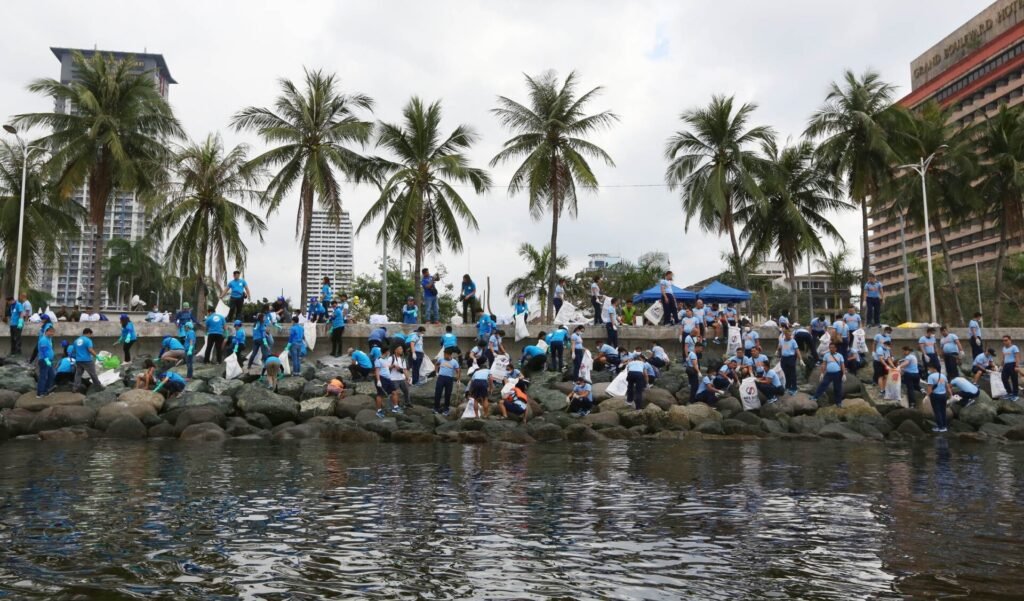
CITY OF SAN FERNANDO, Pampanga — The Department of the Interior and Local Government (DILG) Region 3 underscored the crucial role of local government units (LGUs) in sustaining the cleanup, rehabilitation, and preservation of Manila Bay in compliance with the Supreme Court’s 2008 mandamus ruling.
DILG Region 3 Local Government Monitoring and Evaluation Division Chief Lerrie S. Hernandez said the ruling mandates 13 national government agencies, including the DILG, to ensure enforcement of existing environmental laws through close coordination with LGUs.
“The DILG entered because of the local government units. Our capacity as the alter ego of the President gives us overall supervision over LGUs,” she said.
She explained that Central Luzon has 94 LGUs within the Manila Bay area of concern, covering the provinces of Bataan, Bulacan, Nueva Ecija, Pampanga, and Tarlac.
Hernandez stressed that the Manila Bay rehabilitation program extends beyond coastal municipalities to include inland and upstream areas, particularly river systems such as the Pampanga River, which flows into Manila Bay.
Among the responsibilities of LGUs under the program are the conduct of inventories of liquid waste facilities, implementation of Republic Act 9003 or the Ecological Solid Waste Management Act, relocation of informal settlers along riverbanks, and adoption of septic and wastewater management ordinances.
To monitor LGU compliance, the DILG implemented the Barangay Environmental Compliance Audit, which assesses environmental programs and practice of more than 2,800 barangays annually across the region.
LGUs are also evaluated through the Manila BAYani Awards and incentives and the Fisheries Compliance Assessment, which recognize performance and promote accountability in environmental governance.
“We validate quarterly reports before they reach the Supreme Court. If LGUs fall short, we provide technical assistance and link them with agencies like the PIA [Philippine Information Agency] for communication planning and the Environmental Management Bureau for compliance with violations,” Hernandez added.
She reported that currently, 92 of the 94 LGUs in Central Luzon have already met the required compliance standards under the Manila Bay rehabilitation program.
Hernandez urged local chief executives to sustain environmental initiatives despite changes in leadership to ensure long-term gains in environmental protection.
“I hope that whoever sits as the local chief executive will continue implementing our environmental laws so we can preserve our environment for future generations,” she said.
The Manila Bay cleanup and rehabilitation program remains a joint effort among national agencies, LGUs, and local communities, supported by a system of incentives and penalties to ensure accountability and sustained compliance.