

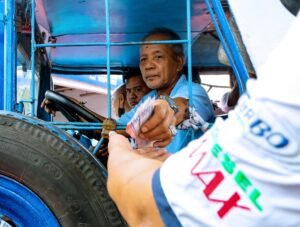

Public utility vehicle (PUV) drivers will start receiving ₱5,000 in fuel subsidy beginning next week as the government moves to cushion the impact of rising oil prices triggered by tensions in the Middle East.
Transportation Secretary Giovanni “Banoy” Lopez said the assistance was ordered by President Ferdinand R. Marcos Jr. to provide immediate relief to transport workers affected by the spike in fuel prices.
To fast-track the rollout, Executive Secretary Ralph Recto convened Metro Manila mayors to coordinate the distribution of the subsidy.
The subsidy will initially be distributed in Metro Manila starting Tuesday next week, with tricycle drivers under local government jurisdiction prioritized, followed by jeepney operators and drivers, and other transport sectors.
The assistance will be released through the Department of Social Welfare and Development (DSWD) using its Assistance to Individuals in Crisis Situation (AICS) program.
DSWD Secretary Rex Gatchalian said drivers affected by rising fuel costs are now considered individuals in crisis due to the impact on their livelihood.
He added that Metro Manila mayors will provide the list of tricycle drivers through their local regulatory units to facilitate the processing of assistance.
“By Tuesday next week, sisimulan na natin iyong pagbigay ng tulong-pinansiyal na naghahalaga sa five thousand pesos sa mga apektadong sektor na nabanggit ho namin (we will start the distribution of financial assistance amounting to PHP5,000 to the affected sectors that we have mentioned),” Gatchalian said.
The subsidy rollout will be conducted simultaneously in Metro Manila, to be followed by other regions nationwide.
Gatchalian said the DSWD has earmarked PHP30 billion from the AICS budget to ensure sustained assistance if the global oil crisis continues.
The government moved to accelerate the subsidy program as global oil prices surged due to the escalating tensions in the Middle East that have disrupted supply routes and increased fuel costs worldwide.