

CITY OF SAN FERNANDO — The Commission on Population and Development (CPD) Region III reported a continued decline in adolescent pregnancies (ages 10–19) in Central Luzon, reflecting gains from the sustained implementation of population and development programs under the Regional Population and Development Plan of Action (RPD-POA) 2023–2028.
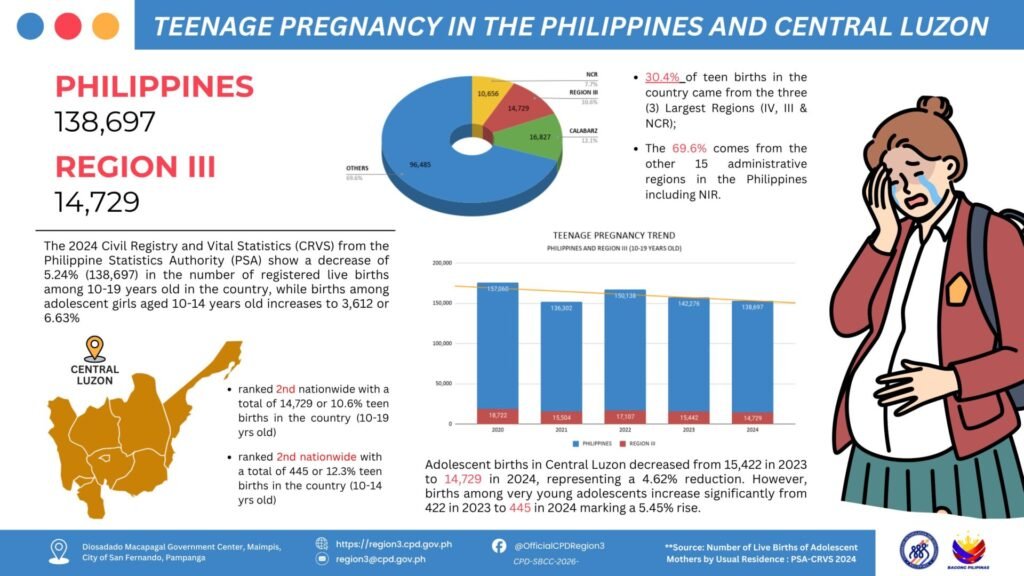
Latest data show that adolescent births in the region decreased from 18,722 in 2020 to 14,729 in 2024, representing a 21.3 percent reduction, surpassing the national decline of 11.7 percent over the same period. Despite this improvement, Region III remains the second highest in the country in terms of adolescent births among those aged 10–19, highlighting the continued need for strengthened and intensified interventions.
“This trend shows that our investments in adolescent health and development are yielding results,” said the CPD Region III Regional Director. “However, the fact that Central Luzon still ranks second nationally tells us that while progress is being made, the magnitude of the issue remains significant and demands sustained action.”
The decline is largely attributed to the intensified implementation of RPD-POA strategies, particularly on Adolescent Health and Development (AHD). These include the expansion of reproductive health education, establishment of teen information centers, and sustained capacity-building for local population officers and educators.
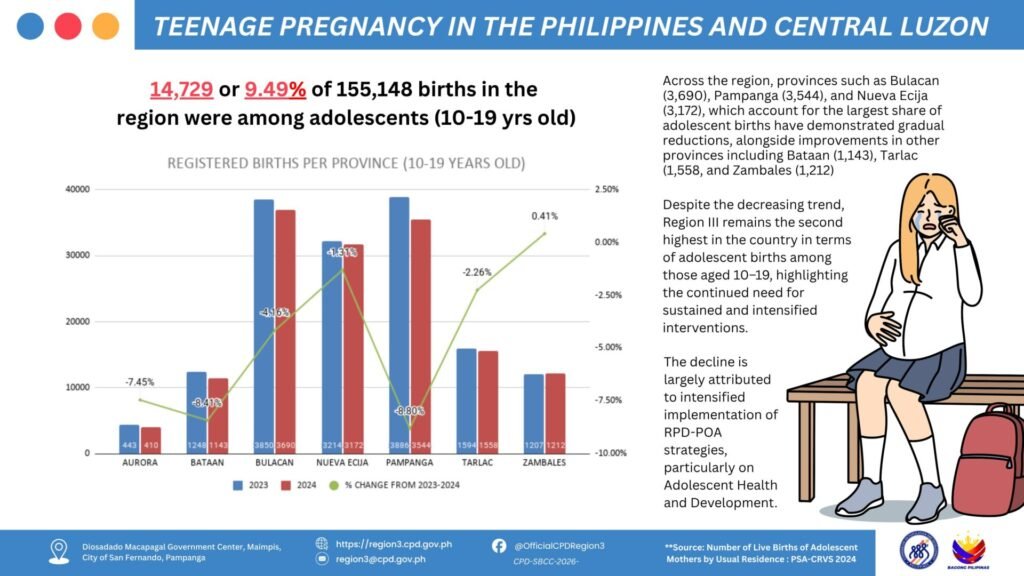
Across the region, provinces such as Bulacan, Pampanga, and Nueva Ecija, which account for the largest share of adolescent births, have demonstrated gradual reductions, alongside improvements in Aurora, Bataan, Tarlac, and Zambales.
However, CPD Region III emphasized that overall progress masks a deeply concerning trend among very young adolescents aged 10–14.
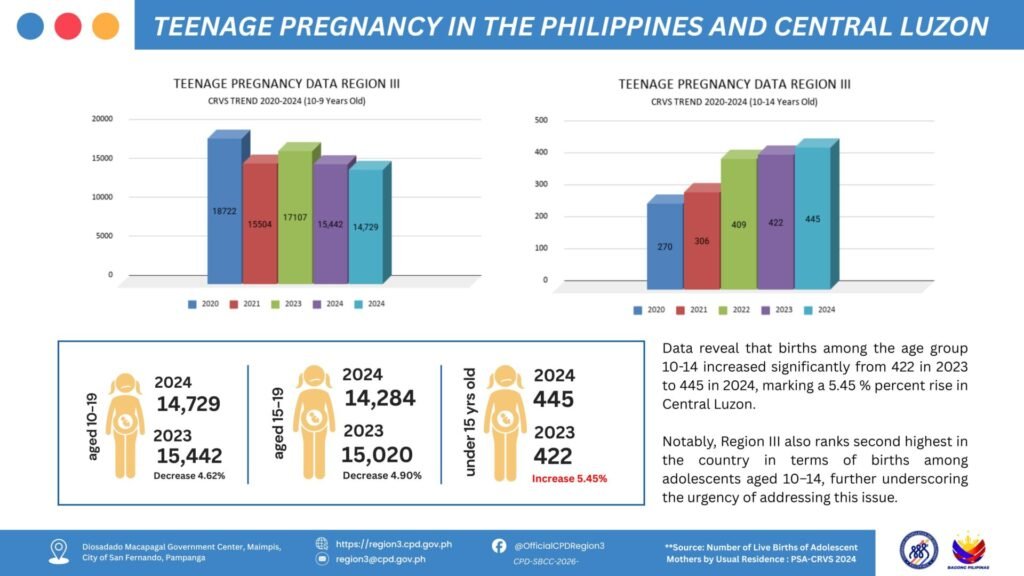
Data reveal that births in this age group increased significantly from 270 in 2020 to 445 in 2024, marking a 64.8 percent rise in Central Luzon. Notably, Region III also ranks second highest in the country in terms of births among adolescents aged 10–14, further underscoring the urgency of addressing this issue.
“We cannot ignore this alarming increase among very young adolescents,” Regional Director Nacionales stressed. “Pregnancies at this age are not simply health concerns, they are often indicators of deeper issues such as sexual coercion, abuse, and gaps in protection systems.”
The RPD-POA midterm assessment has identified the rise in pregnancies among those aged 14 and below as a critical emerging concern, despite the overall declining trends among older adolescents.
In response, CPD Region III is calling for intensified action across sectors to address this challenge, including:
- Strengthening child protection systems and reporting mechanisms
- Expanding age-appropriate comprehensive sexuality education
- Enhancing adolescent-friendly health services, particularly for vulnerable groups
- Mobilizing local government units, Sangguniang Kabataan, and community stakeholders
- Supporting the implementation of the Comprehensive Action Plan on Adolescent Pregnancy Prevention (2025–2028)
“Our approach must evolve,” RD Nacionales added. “While we sustain gains among older adolescents, we must now focus more deliberately on protecting younger children, ensuring they are safe, informed, and supported by responsive systems.”
CPD Region III reaffirmed that addressing adolescent pregnancy remains a key priority under the broader population and development agenda, contributing to improved health outcomes, educational attainment, and long-term socioeconomic development.
“Adolescent pregnancy is not just a health issue, it is a development issue,” Regional Director Nacionales concluded. “By addressing it holistically, we are investing in the future of our young people and the region as a whole.”